

PANCREAZE is a preferred brand on multiple insurance plans and covered on 81% of commercial plans.
Managed Markets Insight & Technology, LLC, database as of May 2026. Certain plans may require prior authorization.
Watch the video to learn more.
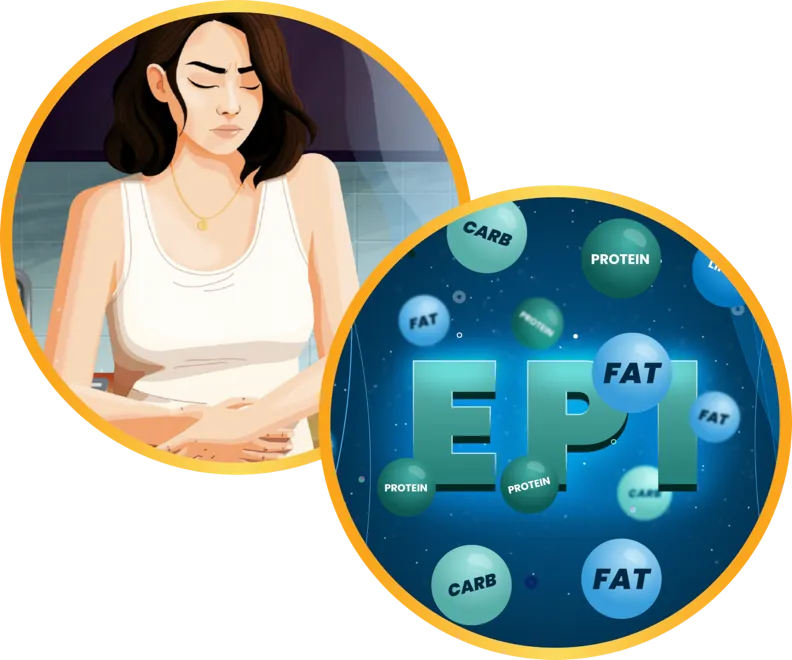
EPI is a condition that occurs when the pancreas is unable to provide the enzymes needed to digest food. When you have exocrine pancreatic insufficiency the body can't properly digest and absorb fats, proteins, and carbohydrates from the food you eat. This means that after you eat, food passes through your system without being fully digested.3
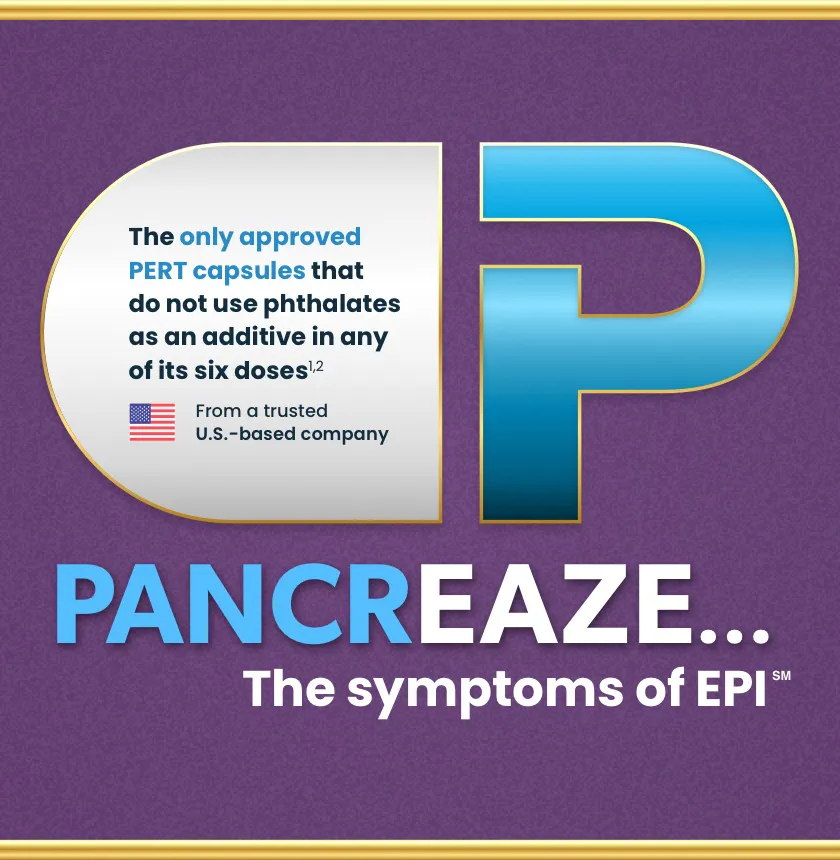
All 6 doses of PANCREAZE use a phthalate-free formulation, ensuring flexible dosing for each patient's unique needs.2 Your doctor will individualize your dose based on age, weight, and symptoms.
6 AVAILABLE STRENGTHS (LIPASE UNITS)
Prior to being diagnosed and treated for EPI, the majority of patients surveyed stated their symptoms made them anxious about navigating daily life, were worried about interruptions from urgent, unpredictable symptoms, and were upset because they didn't know what was causing their symptoms.
†April 2025 online Pancreaze patient survey of 67 respondents.
Respondents were not remunerated for their participation in the survey.
Talk to your doctor to see if PANCREAZE is right for you.
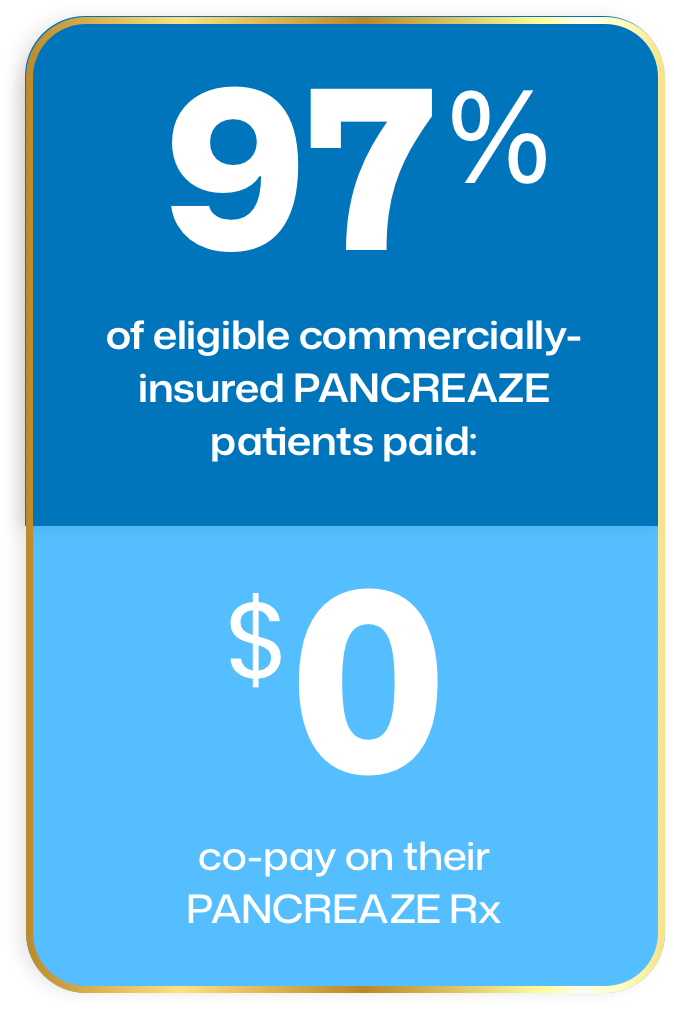
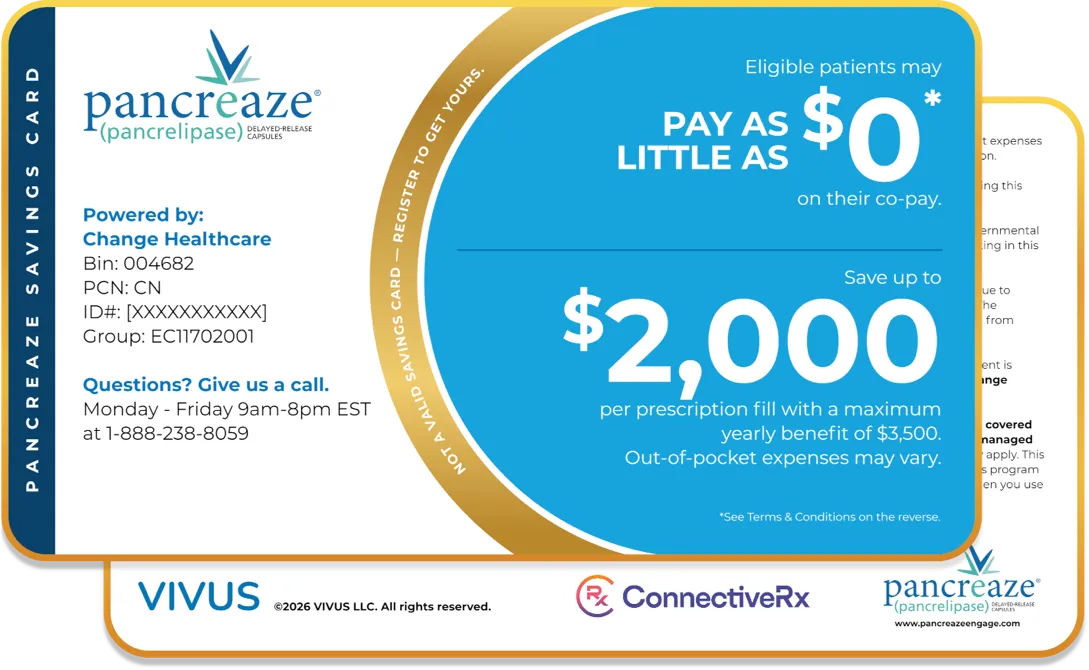
*Eligible patients may pay a minimum of $0 and receive up to $2,000 off the patient’s co-pay or out-of-pocket expenses per prescription fill of PANCREAZE (pancrelipase) capsules with a maximum yearly benefit of $3,500. Out-of-pocket expenses may vary. Click here for more information.
What is PANCREAZE?
PANCREAZE is a prescription medicine used to treat people who cannot digest food normally because their pancreas does not make enough enzymes.
Important Safety Information
What is the most important information I should know about PANCREAZE?
PANCREAZE may increase your chance of having a serious, rare bowel disorder called fibrosing colonopathy that may require surgery. Fibrosing colonopathy has been reported with high dosages of pancreatic enzyme products, usually with use over a prolonged period of time and in pediatric patients with cystic fibrosis. Colonic stricture has been reported in pediatric patients less than 12 years of age.
Take PANCREAZE exactly as prescribed by your doctor. Do not take more or less PANCREAZE than directed by your doctor.
Call your doctor right away if you have any unusual or severe stomach area (abdominal) pain, bloating, trouble passing stool (having bowel movements), nausea, vomiting, or diarrhea.
What should I tell my doctor before taking PANCREAZE?
Tell your doctor if you:
Tell your doctor about all the medicines you take, including prescription and nonprescription medicines, vitamins, and herbal supplements.
What are the possible side effects of PANCREAZE?
PANCREAZE may cause serious side effects, including:
The most common side effects include pain in your stomach (abdominal pain) and gas.
These are not all the side effects of PANCREAZE. Talk to your doctor about any side effect that bothers you or does not go away. You may report side effects to the FDA at 1-800-FDA-1088 or www.fda.gov/medwatch. You may also report side effects to VIVUS LLC at 1-888-998-4887.
How do I take PANCREAZE?
Please read the PANCREAZE Medication Guide and PANCREAZE Product Information and discuss any questions you have with your doctor.
References: 1. PANCREAZE Full Prescribing Information. Campbell, CA: VIVUS LLC; 2024. 2. Cystic Fibrosis Foundation. (n.d.). Phthalates. Retrieved March 3, 2022, from https://www.cff.org/phthalates 3. Cleveland Clinic. (n.d.). Exocrine Pancreatic Insufficiency (EPI). Retrieved from https://my.clevelandclinic.org/health/diseases/21577-exocrine-pancreatic-insufficiency-epi 4. Othman MO, et al. Introduction and practical approach to exocrine pancreatic insufficiency for the practicing clinician. Int J Clin Pract. 2018;72:e13066. 5. Cleveland Clinic. (n.d.). Pancreas. Retrieved from https://my.clevelandclinic.org/health/body/21743-pancreas 6. Struyvenberg MR, et al. Practical guide to exocrine pancreatic insufficiency - breaking the myths. BMC Med. 2017;15(1):29. 7. The National Pancreas Foundation (n.d.). About Chronic Pancreatitis. Retrieved from https://pancreasfoundation.org/patient-information/chronic-pancreatitis/ 8. Fousekis FS, Theopistos VI, Katsanos KH, Christodoulou DK. Pancreatic Involvement in Inflammatory Bowel Disease: A Review. J Clin Med Res. 2018;10(10):743-751. 9. Dominguez-Muñoz JE, et al. European PEI Multidisciplinary Group. European guidelines for the diagnosis and treatment of pancreatic exocrine insufficiency: UEG, EPC, EDS, ESPEN, ESPGHAN, ESDO, and ESPCG evidence-based recommendations. United European Gastroenterol J. 2025 Feb;13(1):125-172. 10. Singh VK, Haupt ME, Geller DE, Hall JA, Quintana Diez PM. Less common etiologies of exocrine pancreatic insufficiency. World J Gastroenterol. 2017 Oct 21;23(39):7059-7076. 11. Mayo Clinic. (n.d.). Gastric bypass (Roux-en-Y). Retrieved from https://www.mayoclinic.org/tests-procedures/gastric-bypass-surgery/about/pac-20385189 12. Uribarri-Gonzalez L, et al. Exocrine pancreatic function and dynamic of digestion after restrictive and malabsorptive bariatric surgery: a prospective, cross-sectional, and comparative study. Surg Obes Relat Dis. 2021 Oct;17(10):1766-1772 13. Vujasinovic M, et al. Pancreatic Exocrine Insufficiency after Bariatric Surgery. Nutrients. 2017 Nov 13;9(11):1241. 14. Trapnell BC, Strausbaugh SD, Woo MS, et al. Efficacy and safety of PANCREAZE for treatment of exocrine pancreatic insufficiency due to cystic fibrosis. J Cyst Fibros. 2011;10(5):350-356
Important Safety Information
PANCREAZE may increase your chance of having a serious, rare bowel disorder called fibrosing colonopathy that may require surgery. Fibrosing colonopathy has been reported with high dosages of pancreatic enzyme products, usually with use over a prolonged period of time and in pediatric patients with cystic fibrosis. Colonic stricture has been reported in pediatric patients less than 12 years of age.
VIEW ALL +